
Outdoor cooking feels more orderly when shelter, tools, and preparation surfaces have assigned places, and SUNJOY designs its outdoor grill gazebo collection around that practical organization. A weather-resistant roof can limit exposure to sun and light rain, yet the presence of a roof makes heat clearance and ventilation more important, not less.
A BBQ gazebo deserves consideration a cooking shelter rather than a fireproof enclosure. Grill manuals, fuel instructions, local fire codes, and temporary burn restrictions remain controlling sources. Decorative curtains, netting, shelves, and hooks must never lower the clearance required around hot equipment.
Safe use rests on several small decisions made before ignition. The grill needs a stable noncombustible surface, the cook needs an unobstructed working area, and guests need a route that does not cross the hot zone. Fuel, grease, wind, and weather should all be addressed before food preparation begins.
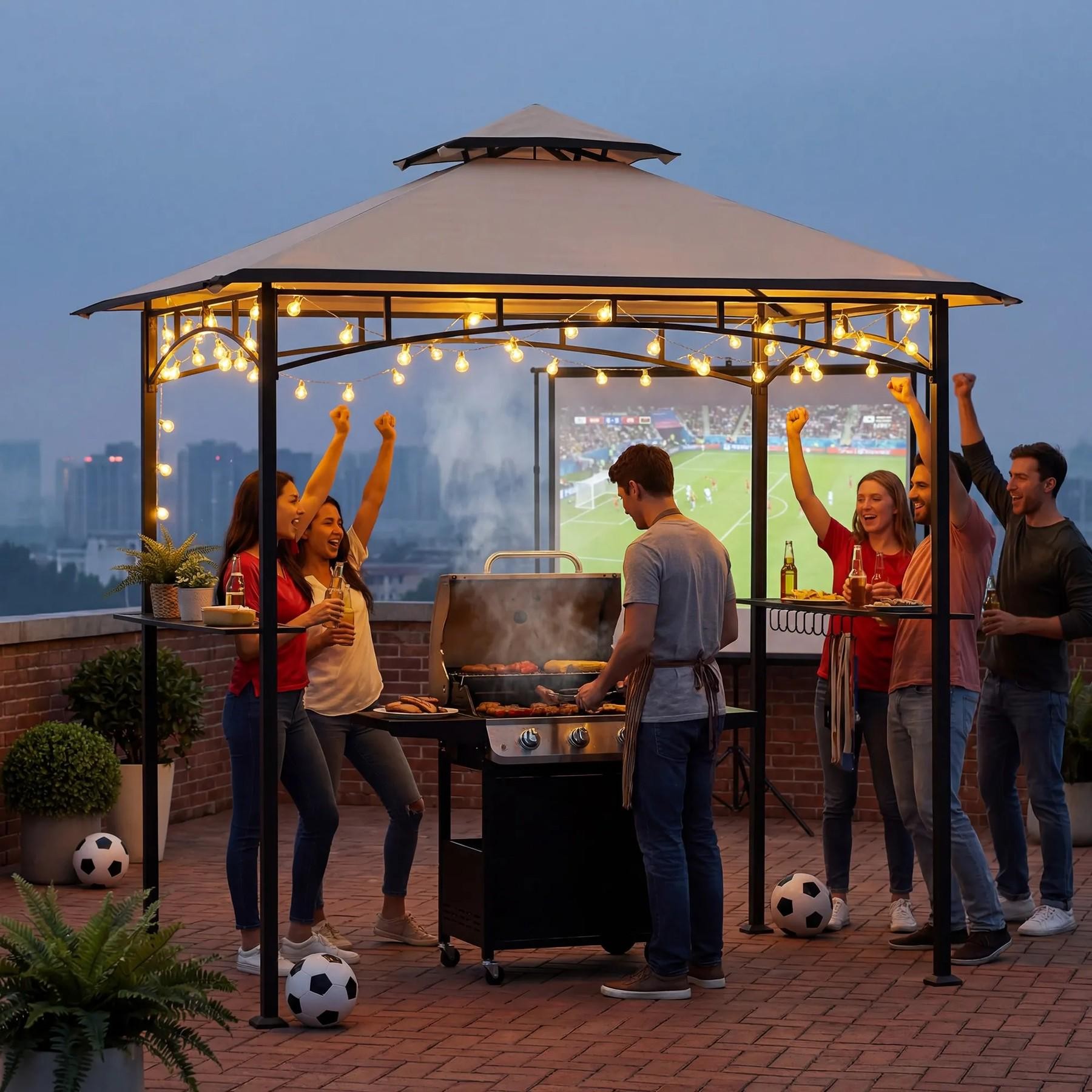
Build the Cooking Zone Around Clearance
The grill manufacturer normally states minimum distances from walls, ceilings, combustible materials, and overhead surfaces. Those instructions should determine placement inside an outdoor grill gazebo. A convenient shelf is useful only when it sits outside the required heat envelope and does not collect towels, paper products, or plastic utensils near the flame.
Open sides support ventilation, but smoke must still have a clear path away from the cook and seating. Closing a bbq gazebo with improvised panels can trap heat, carbon monoxide, and grease-laden vapor. Any accessory curtains ought to remain fully retracted during cooking unless the specific product and appliance instructions expressly permit another arrangement.
The floor beneath the grill should be level and resistant to heat and grease. A grill placed on an unstable paver, loose mat, or sloped surface can shift when the lid opens or food is moved. Drip trays require inspection because accumulated grease may ignite even when the main cooking process appears controlled.
A fire extinguisher rated for the relevant hazards ought to remain accessible without requiring anyone to approach the flames. Water is not appropriate for a grease fire. The cook should also know how to shut off propane or close grill vents, provided that doing so may be accomplished without unsafe exposure.
The roof underside requires inspection for discoloration, soot, or heat damage. Such signs can indicate that the grill is too close, exhaust is being trapped, or flames have flared higher than expected. Repositioning and professional advice are preferable to treating visible damage as normal cooking wear.
Manage Fuel, Weather, and Human Attention
Propane cylinders belong upright in approved locations, away from excessive heat and not stored beneath a hot grill unless the appliance is designed for that arrangement. Charcoal starter fluid, spare fuel, and combustible cleaners ought to remain outside the active zone. Connections need periodic leak checks according to the grill manufacturer’s directions.
Cooking should never be left unattended. A phone call, indoor errand, or conversation can become a long distraction while fat drips or wind changes. One adult should retain clear responsibility for the grill, especially when several people are preparing side dishes or serving from the bbq gazebo.
Light rain may be manageable under a suitable roof, but thunderstorms, strong gusts, or wind-driven precipitation are different conditions. Water near hot oil can cause violent splattering, while gusts can disturb flames and carry embers. Severe weather is a reason to stop cooking instead of test the shelter’s limits.
After the meal, the equipment must cool completely before a cover is fitted or fuel is moved. Ashes require a metal container and sufficient cooling time. Grease, food residue, and utensils should be removed so that pests and future flare-ups do not develop around the outdoor grill gazebo.
Children and pets need boundaries outside the cooking clearance. Serving snacks beside the grill encourages traffic through the hazardous zone, so a separate table is safer. Guests should not lean on shelves or posts while the cook is opening the lid or moving hot cookware.
Use SUNJOY Features Without Mistaking Them for Safeguards
SUNJOY grill shelters may include bar shelves, storage surfaces, side hooks, or ceiling hooks that keep tools within reach. These features can limit clutter on the floor and help the cook maintain a consistent workflow. They do not certify that every grill fits every structure, so dimensions and clearances still require comparison.
The collection includes fabric-top and hardtop designs with two-tier, arched, gable, or shed-style roofs. Each roof type has different maintenance needs. Fabric should be cleaned gently and stored only when fully dry, while hardtop roofs should not be allowed to carry unnecessary accumulations of snow or debris.
Before selecting a bbq gazebo, the household should compare the grill’s open-lid height, heat output, fuel location, side-shelf width, and required service access with the shelter’s usable interior. Anchoring instructions and local setback rules are just as relevant as appearance or countertop space.
A well-managed SUNJOY outdoor grill gazebo can make cooking more organized and supply measured weather protection. Its safety, however, comes from disciplined placement, continuous supervision, correct fuel handling, and respect for appliance instructions. The shelter supports those practices; it cannot replace them.
A brief pre-cook check can confirm that the SUNJOY bbq gazebo is anchored, the roof area is clear, the extinguisher is reachable, and the grill is stable. This routine takes little time and catches changes caused by weather, storage, or the previous use before heat is introduced.