
Maintaining stable altitude is one of the most important challenges for unmanned aerial vehicles operating in complex environments. When drones fly over hills, farmland, forests, or construction sites, the ground level constantly changes. Without proper adjustment, the aircraft may drift too far from the surface or descend too close to obstacles. This is why drone terrain following has become a critical feature for many UAV missions.
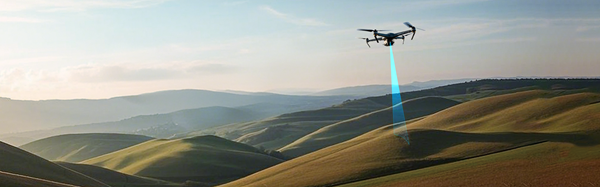
Terrain-following systems allow drones to automatically maintain a constant height above the ground by using distance sensors mounted beneath the aircraft. Instead of relying solely on GPS altitude, the drone measures the real-time distance to the terrain and adjusts its flight path accordingly. By using a reliable Benewake lidar sensor, developers can significantly improve altitude stability and ensure smoother flight performance over uneven ground.
In this article, we explore several practical tips that help optimize terrain-following systems and improve drone performance in real-world environments.
Understand the Basics of Drone Terrain Following
Before optimizing the system, it is important to understand how drone terrain following works. In a typical configuration, a LiDAR sensor is mounted on the underside of the drone, pointing toward the ground. The sensor continuously emits light pulses and measures the time required for the reflected signal to return. This measurement provides the exact distance between the drone and the surface below.
The flight controller compares this distance with a predefined target height. If the terrain rises, the drone increases altitude. If the ground drops, the drone descends accordingly. This continuous adjustment allows the aircraft to maintain a consistent height above the terrain even when flying across uneven landscapes.
Compared with traditional altitude control methods based only on GPS or barometric sensors, LiDAR-based terrain following provides more accurate ground distance measurements. This leads to smoother flight paths and improved operational safety.
Choose the Right Sensor Placement
Proper sensor placement is one of the most important factors affecting terrain-following performance. If the sensor is installed incorrectly, the drone may receive distorted or incomplete distance data.
For best results, the LiDAR module should be mounted directly underneath the drone with a clear and unobstructed field of view. Structural components such as landing gear, frames, or cameras should not block the sensor’s measurement path. Even small obstructions can interfere with the laser beam and introduce measurement errors.
Vibration isolation is another important consideration. Excessive vibration from motors or propellers can affect sensor readings and lead to unstable altitude adjustments. Using proper mounting brackets or damping materials can help reduce vibration effects and improve measurement stability.
Correct installation ensures that the Benewake lidar sensor can continuously capture accurate terrain data during flight.
Adjust Flight Speed for Terrain Conditions
Flight speed has a direct impact on how effectively a drone can follow terrain. When flying over rapidly changing landscapes, the drone needs enough time to process sensor data and adjust altitude accordingly.
If the aircraft moves too quickly across steep terrain, even a fast sensor may not provide sufficient time for the flight controller to react. This can cause delayed altitude corrections, resulting in uneven flight paths.
A good strategy is to match flight speed with terrain complexity. Slower speeds allow the drone to adapt more smoothly to elevation changes, especially in mountainous or irregular landscapes.
When combined with a responsive LiDAR sensor, appropriate speed adjustments can greatly improve the stability of drone terrain following operations.
Optimize Flight Controller Parameters
Even with a high-quality LiDAR sensor, the terrain-following system depends heavily on flight controller configuration. Parameters such as altitude response sensitivity, control loop frequency, and filtering algorithms all influence how the drone reacts to terrain data.
Improper tuning can cause oscillations where the drone continuously climbs and descends instead of maintaining stable altitude. This often happens when control gains are too aggressive or when measurement noise is not properly filtered.
Engineers typically refine these parameters during testing flights. By gradually adjusting the control settings, developers can achieve smoother altitude transitions and more stable terrain-following performance.
Careful calibration ensures that the sensor data from the LiDAR module translates into precise flight adjustments.
Reduce Environmental Interference
Environmental conditions can also affect terrain-following accuracy. Factors such as strong sunlight, reflective surfaces, or airborne particles may introduce noise into sensor readings if the system is not designed to handle these conditions.
Modern LiDAR sensors use advanced signal processing algorithms to improve measurement stability under varying environmental conditions. These algorithms help filter noise and maintain reliable distance detection even in outdoor environments with fluctuating lighting or weather conditions.
When selecting a sensor for UAV applications, choosing a device specifically designed for outdoor operation can significantly improve terrain-following reliability.
Benewake LiDAR for Drone Terrain Following
Reliable sensors play a central role in successful terrain-following systems. According to the application overview provided by Benewake, LiDAR-based altitude measurement allows drones to maintain stable flight height by continuously monitoring the distance between the aircraft and the ground. This capability is particularly useful for aerial missions such as terrain mapping, infrastructure inspection, and agricultural operations.
A Benewake lidar sensor can be mounted beneath the drone to measure ground distance in real time. The sensor sends this data directly to the flight controller, enabling the aircraft to adjust its altitude automatically as terrain elevation changes. Because LiDAR measurements are based on direct distance detection rather than atmospheric pressure or satellite signals, they provide more consistent altitude control in environments with uneven terrain.
This sensing approach allows drones to fly more smoothly and safely while maintaining precise operational height above the ground.
About Benewake
Benewake specializes in the development of laser ranging technologies and compact LiDAR sensors for robotics, UAV systems, industrial automation, and smart infrastructure monitoring. The company focuses on delivering reliable sensing solutions that combine precision measurement, compact design, and easy system integration.
If you are developing UAV systems that rely on drone terrain following, selecting a reliable Benewake lidar sensor can help improve altitude stability and flight safety. Visit the Benewake website to explore their LiDAR solutions and learn how these sensors can support smoother and more reliable drone operations.